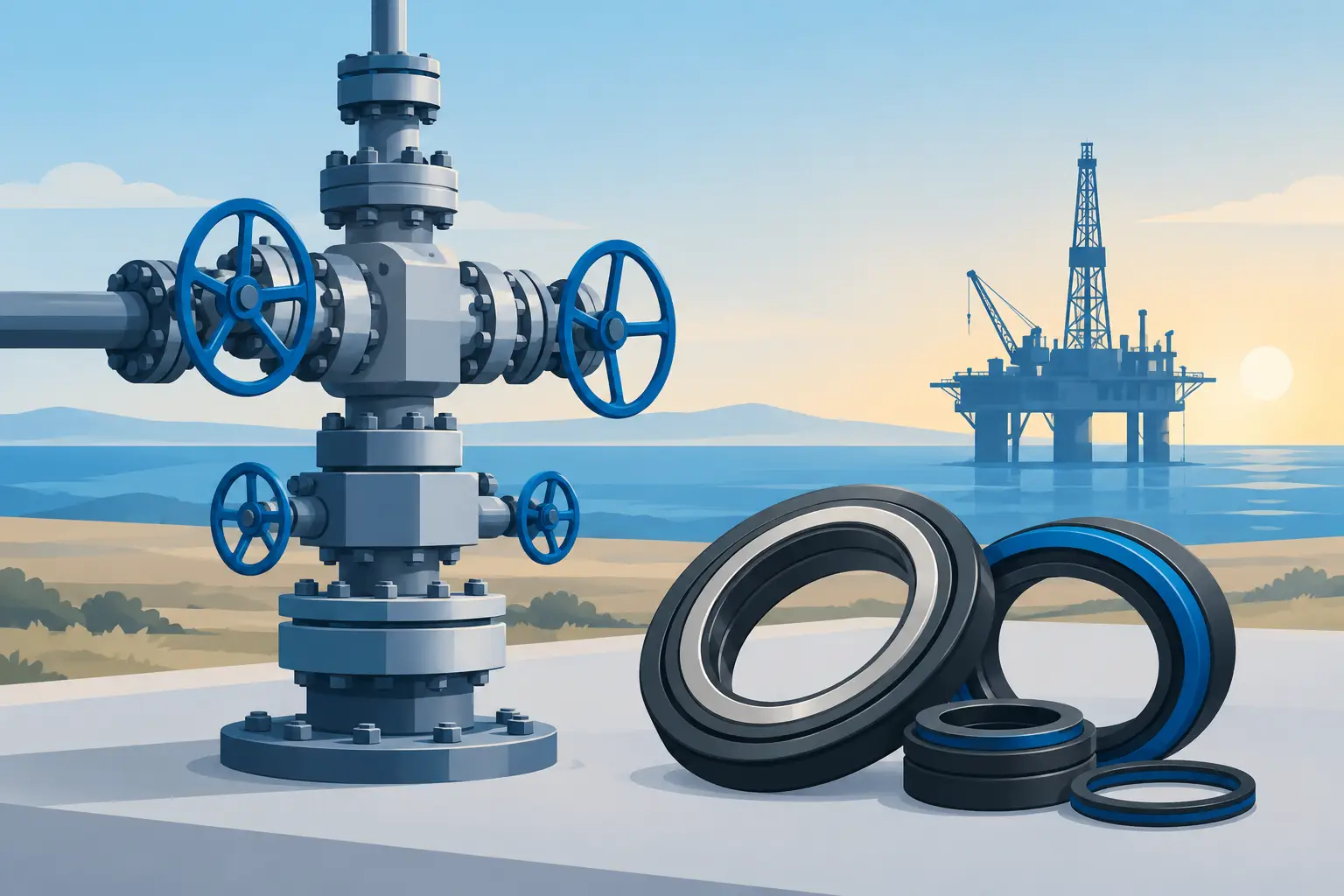
A wellhead seal may be a relatively small component, but it sits at the center of a high-consequence containment system. Oil and gas wellhead seals must hold pressure, contain produced fluids and gases, and protect critical equipment through changing temperatures, vibration, and demanding service cycles. When the wrong seal is selected or a replacement does not match the application, the result can be leakage, unplanned shutdowns, safety exposure, and expensive field intervention.
For maintenance teams, engineers, and procurement professionals, dependable wellhead sealing is not simply about finding a part that fits. It is about selecting a component that performs consistently under the actual operating conditions of the well.
What Oil and Gas Wellhead Seals Must Do
The wellhead provides a pressure-control interface between the wellbore and surface equipment. Its sealing components support that function at connections, valves, flanges, tubing heads, casing heads, adapters, and associated control equipment. Depending on the assembly, these may include O-rings, bonded seals, gasket systems, metal-to-metal seal arrangements, and specialty elastomer components.
Their fundamental job is straightforward: maintain separation between pressurized media and the outside environment. In practice, that job becomes more difficult when seals face pressure cycling, abrasive particulates, corrosive fluids, thermal expansion, equipment movement, and long intervals between scheduled maintenance.
A seal that performs well in a controlled shop environment may not be suitable for a wellhead exposed to weather, pressure fluctuations, chemical contact, and repeated intervention. Selection must account for the complete service picture, not just nominal dimensions.
The Operating Conditions That Drive Seal Selection
A wellhead seal is only as reliable as its match to the application. Pressure rating matters, but it is one part of the decision. The fluid or gas being contained, temperature range, equipment design, surface condition, installation method, and expected maintenance interval all influence performance.
Pressure and pressure cycling
High pressure can force a poorly supported elastomer into clearances between mating components. This is known as extrusion, and it can quickly damage a seal or create a leak path. Back-up rings, bonded sealing designs, or other support features may be needed where pressure and clearance conditions create extrusion risk.
Pressure cycling deserves equal attention. A seal may hold at steady pressure but lose effectiveness when repeated changes cause movement, compression changes, or fatigue. Wellhead applications that see frequent testing, shut-ins, restarts, or production changes should be evaluated for dynamic operating conditions rather than maximum pressure alone.
Media compatibility
Produced water, crude oil, condensate, natural gas, drilling fluids, completion fluids, and treatment chemicals can affect sealing materials differently. Some media cause swelling, hardening, softening, cracking, or loss of elasticity over time. Sour service introduces additional concerns that require careful material and application review.
Material compatibility should be confirmed against the actual media expected at the sealing point. It is also wise to consider intermittent chemical exposure, including cleaning agents, inhibitors, and fluids used during maintenance or intervention.
Temperature range
Temperature changes affect both the seal material and the hardware around it. At low temperatures, an elastomer can lose flexibility and become less able to maintain contact with sealing surfaces. At elevated temperatures, the same material may soften, age faster, or suffer compression set.
The correct choice depends on minimum and maximum operating temperatures, the duration of exposure, and how quickly the system cycles. A material selected only for a brief peak temperature may not provide the service life needed for continuous operation.
Hardware condition and installation
Even the right seal can fail early if the mating surfaces are damaged, improperly finished, contaminated, or misaligned. Nicks, corrosion, burrs, and scratches create potential leak paths. Incorrect groove dimensions or excessive clearance can prevent the seal from receiving the compression and support it needs.
Installation practices matter just as much. Technicians should verify part identity, inspect components before assembly, follow applicable torque procedures, and avoid twisting, cutting, or pinching the seal. Lubricants and assembly aids should also be compatible with the seal material and service media.
Common Seal Types Used Around Wellhead Equipment
There is no single best seal for every wellhead. The appropriate design depends on the equipment interface and the operating demands at that location.
O-rings are widely used where the geometry supports an elastomeric sealing element. They are compact, available in many materials and sizes, and effective when groove design, compression, and pressure conditions are properly controlled. Their versatility makes them a common replacement item, but exact sizing and material selection remain essential.
Bonded seals combine an elastomer sealing element with a metal washer or carrier. This design can provide reliable sealing at bolted connections and threaded interfaces where controlled compression is required. The metal portion helps support the assembly, while the elastomer conforms to surface irregularities.
Gasket systems are used at flanged connections and other larger interfaces. Their performance depends on material, thickness, bolt load, flange condition, and the media being contained. Inconsistent bolt loading or damaged flange faces can compromise even a properly specified gasket.
Mechanical and specialty seals may be used in associated rotating or process equipment connected to wellhead operations. These components address different sealing challenges, particularly where shafts or moving equipment introduce dynamic motion. Matching the seal category to the equipment function is the first step toward dependable containment.
Why Exact Replacement Details Matter
When a wellhead seal fails, teams often need a replacement quickly. Speed is necessary, but guessing can create a second failure and more downtime. A seal with a similar outside diameter may still differ in cross-section, hardness, material, pressure capability, or configuration.
Before ordering a replacement, capture as much application information as possible. Useful details include the equipment manufacturer and model, part number, seal dimensions, media, operating pressure, temperature range, and a description of the failure. Photos of the old part and sealing location can also help clarify the requirement when documentation is incomplete.
If the removed seal is flattened, cracked, swollen, or extruded, that condition is valuable evidence. It may point to a material compatibility issue, excessive temperature, pressure clearance, installation damage, or a hardware problem. Replacing the part without investigating the failure mode can leave the underlying cause unresolved.
A Practical Approach to Reducing Seal Failures
Wellhead reliability improves when seal selection and maintenance are handled as part of an operating strategy, not as an emergency purchasing task. Establish approved replacement specifications for frequently serviced equipment, including exact dimensions and material requirements. Keeping this information available reduces delays and limits substitution risk when a repair becomes urgent.
During planned maintenance, inspect mating surfaces and surrounding hardware instead of focusing only on the failed seal. Look for corrosion, pitting, deformation, loose fasteners, and evidence of misalignment. A recurring leak is often a system issue rather than a component issue.
Inventory planning also matters. Operations with remote locations or high-cost downtime should identify the seals most likely to be needed and maintain appropriate stock levels. The objective is not to overstock every possible part. It is to have critical, correctly specified components available when equipment cannot wait.
A trusted sealing supplier can help translate field requirements into an appropriate O-ring, bonded seal, gasket, or application-specific alternative. At International Seals, customers can work directly with specialists to confirm replacement details and source dependable sealing products for demanding industrial service.
When a Standard Seal May Not Be Enough
Standard components are often the most practical solution when equipment and operating conditions align with established specifications. However, unusual pressures, temperature extremes, aggressive chemical exposure, damaged legacy equipment, or repeated failures may require a closer review.
In these situations, the right answer may involve a different material, a revised seal geometry, added back-up support, or correction of the mating hardware. There are trade-offs. A higher-performance material may improve resistance to temperature or chemicals but can be less flexible in cold conditions or require tighter installation control. The best choice is the one that fits the complete operating environment and maintenance objective.
Reliable wellhead containment starts before installation. Confirm the application, verify the replacement, inspect the hardware, and give the seal the conditions it needs to perform. That discipline protects pressure integrity, supports safer operations, and gives maintenance teams greater confidence when the well must stay online.
Leave a Reply