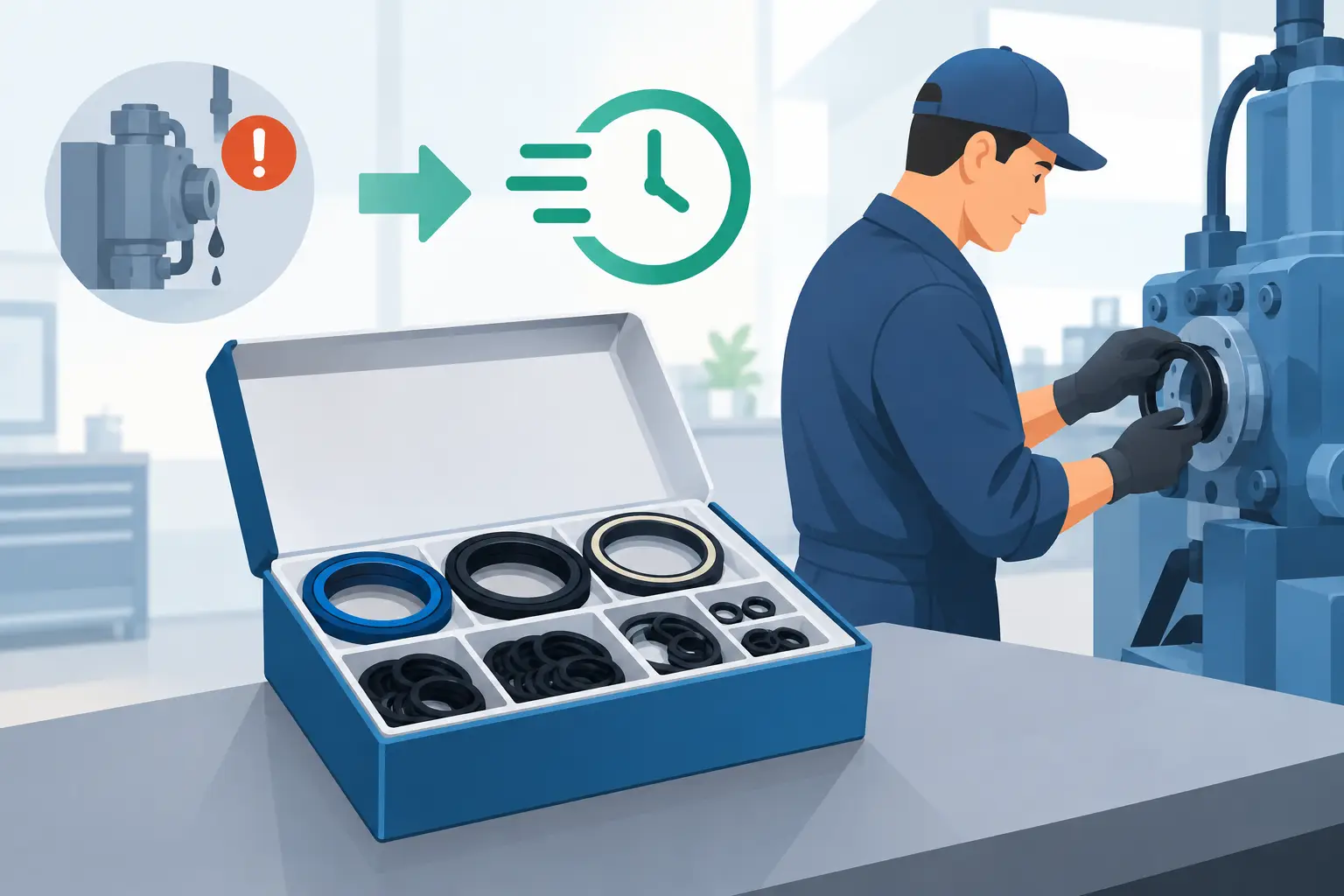
A leak at a hydraulic fitting or fluid connection rarely waits for a convenient maintenance window. When a technician has the correct bonded seal on hand, a small repair can stay small. When the seal must be identified, sourced, and shipped after the equipment is down, lost production and labor costs can rise quickly. A bonded seal kit box gives maintenance teams an organized selection of commonly needed seals so they can restore pressure joints with greater speed and confidence.
For industrial operations, the value is not simply having more parts in storage. It is having the right sealing option available, clearly identified, protected from damage, and ready for the application. The right kit can help prevent fluid loss, reduce delays at the point of repair, and support more reliable equipment uptime across hydraulic, pneumatic, and process systems.
What a Bonded Seal Kit Box Is Designed to Solve
A bonded seal combines a metal washer with an elastomer sealing element. The metal ring provides strength and controlled compression, while the elastomer portion creates the fluid-tight seal. This design is commonly used on threaded connections, plugs, adapters, and fittings where dependable sealing is needed under pressure.
A kit box organizes multiple bonded seal sizes in separate, labeled compartments. Instead of keeping loose washers in a drawer or relying on a single assortment of uncertain origin, technicians can compare the fitting and select a compatible seal quickly. That matters during planned maintenance, but it matters even more when a machine is stopped and a repair crew is working against the clock.
The best use case is not universal. A mobile service vehicle, repair shop, irrigation contractor, or plant maintenance department may benefit from a broad kit that covers recurring connection sizes. A facility with specialized equipment may need a narrower selection built around its own maintenance history. In either case, organization supports better decisions and reduces the risk of installing an improvised replacement.
Where Bonded Seals Protect Equipment
Bonded seals are often selected for static sealing points where a threaded or bolted connection must contain oil, fuel, water, air, or another process fluid. They are widely used in hydraulic fittings, valves, pumps, manifolds, cylinders, gearboxes, compressors, filtration systems, and fluid-transfer equipment.
Their performance depends on the full connection, not the seal alone. A fitting with damaged threads, an uneven sealing face, excessive torque, or a mismatched seal may still leak. The bonded seal is one part of a controlled repair process: inspect the connection, verify the size, use the correct component, and tighten according to the equipment manufacturer’s requirements.
For operations in oil and gas, water management, power generation, industrial transportation, and irrigation, a reliable fitting seal can help protect more than the immediate joint. It can prevent fluid from reaching electrical components, walking surfaces, finished goods, or environmentally sensitive areas. In food and drug production, the material requirements and cleanliness expectations may be more demanding, making accurate product selection especially important.
Choosing the Right Bonded Seal Kit Box
A kit should be chosen around the equipment your team services most often. The lowest initial cost is not always the best value if the assortment lacks the sizes your technicians actually use or if the seals are difficult to identify under field conditions. A practical kit supports fast selection without creating excess inventory that sits unused.
Start with fitting sizes and connection standards
Review maintenance records, equipment manuals, and recurring repair tickets before selecting an assortment. Identify the thread sizes, fitting styles, and equipment families that appear most frequently. This helps distinguish between a general-purpose kit for service work and a targeted kit for a specific hydraulic fleet or plant system.
Do not assume that seals with a similar outside diameter are interchangeable. Inner diameter, outer diameter, metal washer profile, and rubber sealing element dimensions all affect fit and compression. A kit with clearly separated compartments and durable size markings reduces the chance of selecting by appearance alone.
Match the elastomer to the operating environment
The elastomer portion must be compatible with the fluid, temperature range, and operating conditions. Nitrile is commonly used for many petroleum-based oils and general hydraulic service. Other compounds may be needed where heat, aggressive chemicals, fuel blends, water exposure, or specialized process media are present.
Material selection is where technical guidance can prevent an expensive repeat repair. A seal that fits the connection but cannot tolerate the fluid or temperature may harden, swell, crack, or lose its sealing ability prematurely. When the application is uncertain, provide the equipment details, media, pressure, and temperature conditions to a seal specialist before ordering.
Consider kit construction, labeling, and replenishment
The box itself is part of the maintenance solution. Compartments should keep sizes separated so seals do not become mixed, crushed, or contaminated. Clear labels make the kit useful to experienced technicians and new team members alike. A secure closure also matters for service trucks and field crews that transport inventory between jobs.
Replenishment deserves equal attention. If a kit is used regularly, establish a simple restocking point for high-turn sizes. Waiting until the last seal is gone creates the same purchasing delay the kit was meant to avoid. Maintenance managers can also use usage patterns to refine future assortments and avoid carrying sizes that are rarely installed.
Using a Bonded Seal Kit Box Without Creating New Problems
Quick access should never lead to casual installation. Before fitting a new bonded seal, clean the mating surfaces and inspect them for burrs, scratches, corrosion, distortion, or embedded debris. A clean, flat contact area gives the elastomer its best opportunity to seal evenly.
Avoid reusing a bonded seal unless the equipment manufacturer specifically permits it and the component remains in verified serviceable condition. Compression, handling damage, and fluid exposure can compromise the sealing element even when a used part looks acceptable. For critical pressure connections, replacement is generally the more dependable maintenance decision.
Technicians should also avoid over-tightening. Excessive torque can deform the metal ring, damage the sealing lip, or harm the fitting itself. Under-tightening can leave insufficient compression. Follow the fitting or equipment manufacturer’s torque guidance, then check the assembly for leakage under appropriate operating conditions.
A few disciplined practices help preserve kit quality over time:
- Keep the kit closed and stored away from unnecessary heat, direct sunlight, dirt, and moisture.
- Return unused seals to their labeled compartment rather than placing them loose in a toolbox.
- Remove any seal that is cut, distorted, hardened, contaminated, or difficult to identify.
- Record repeated failures at the same connection, since the cause may be fitting damage or system conditions rather than the seal choice.
When a Kit Is Not Enough
A bonded seal kit box is highly effective for common repair needs, but it should not replace application-specific sourcing. Some systems require unusual dimensions, certified materials, specialized coatings, or defined traceability. High-pressure hydraulic service, chemical processing, regulated production environments, and OEM-sensitive repairs may call for an exact part specification rather than the closest available kit size.
This is also true when leakage returns after a correct replacement. Repeated failure may point to pressure spikes, misalignment, contamination, damaged mating surfaces, or an incorrect fitting design. Replacing seals without investigating the connection can turn a preventable problem into recurring downtime.
For these situations, working with a trusted partner that can evaluate the application is more valuable than guessing. International Seals helps industrial buyers identify suitable bonded seals and related sealing components for equipment that cannot afford unnecessary leakage or extended maintenance delays.
Build Readiness Around the Repairs You Actually Make
The strongest kit strategy begins with real maintenance data. Track which sizes are used, where failures occur, and which equipment creates the most urgent parts requests. That information can shape a kit box that supports your technicians instead of adding generic inventory to the shelf.
Keep commonly used bonded seals organized, verify replacements before installation, and treat repeat leaks as a signal to inspect the complete connection. Those practical steps give maintenance teams a better chance to protect pressure, keep equipment operating, and complete repairs with complete confidence.
Leave a Reply