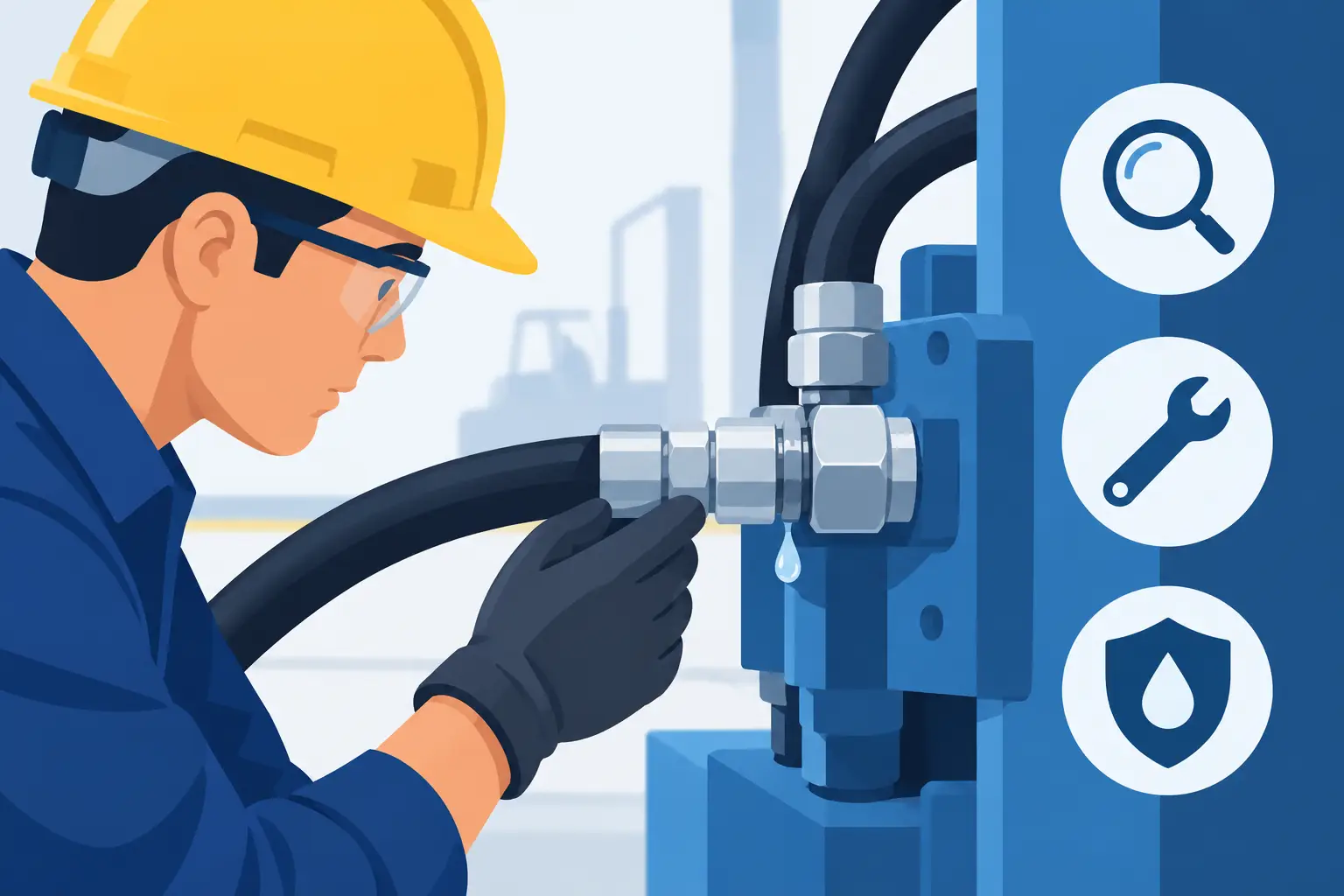
A hydraulic fitting that weeps only during a pressure spike can become a shutdown, a safety exposure, or a contamination issue long before the leak looks serious. To prevent hydraulic fitting leaks, maintenance teams need to treat the connection as a complete sealing system: the fitting style, port condition, seal material, assembly method, hose routing, and operating pressure all have to work together.
For industrial equipment, the cost is rarely limited to lost fluid. A leaking connection can reduce system pressure, damage adjacent components, create slip hazards, compromise product cleanliness, and force unplanned maintenance. The following practices help maintenance managers, technicians, and procurement teams maintain dependable hydraulic connections under demanding operating conditions.
Start With the Right Fitting and Seal Design
Many persistent leaks begin before installation. A fitting may physically thread into a port while still being incompatible with the intended sealing method. Thread size alone does not confirm compatibility. Connection angle, seat design, thread form, pressure rating, and the location of the sealing surface must all match.
For example, JIC fittings seal at a 37-degree flare, while O-ring face seal fittings use an elastomeric O-ring compressed between flat mating faces. NPT connections rely on tapered threads, and straight-thread ports often require an O-ring or bonded seal at the port face. Substituting one connection type for another, or attempting to make mismatched components fit with excess sealant, creates a weak point that may fail under vibration or pressure cycling.
Select fittings rated for the system’s maximum working pressure, including expected pressure spikes. Equipment that sees pulsation, temperature swings, or frequent motion may require a connection style with greater resistance to vibration and fatigue. The right choice depends on the application. A stationary low-pressure utility line has different demands than a high-pressure mobile hydraulic circuit or a power-generation system operating continuously.
Seal selection matters just as much. The seal must be compatible with the hydraulic fluid, operating temperature, pressure, and service environment. An O-ring or bonded seal that swells, hardens, extrudes, or loses elasticity cannot maintain a reliable pressure boundary. When equipment requirements are unclear, confirm the fitting standard and seal specification before ordering replacement components.
Inspect the Mating Surfaces Before Assembly
A new fitting cannot compensate for a damaged port, scratched flare, distorted tube end, or contaminated sealing face. Before assembly, clean both sides of the connection and inspect the sealing area under adequate light. Look for corrosion, nicks, flattened threads, dents, scoring, and evidence that a previous fitting was overtightened.
On flare-style connections, damage to the cone or flare can prevent full metal-to-metal contact. On O-ring face seal connections, a scratch across the face may create a direct leak path. In ports that use O-rings or bonded seals, inspect the groove and seating surface for burrs that can cut the seal during installation.
Cleanliness is not cosmetic. Dirt, metal chips, old thread sealant, and damaged fragments of elastomer can interfere with seating and enter the hydraulic system. A clean connection protects the new seal and reduces the risk of downstream component wear. Use lint-free materials where contamination control is critical, especially in food production, power generation, and other high-consequence operations.
Replace Seals Instead of Reusing Them
Reusing a compressed O-ring, bonded seal, or gasket may appear economical during a quick repair, but it adds unnecessary uncertainty. Once a seal has been compressed, exposed to heat, or contacted by fluid, its ability to recover may be reduced. Replace the seal whenever the connection is opened unless the equipment manufacturer specifically allows otherwise.
Lightly lubricate an O-ring with a fluid-compatible lubricant when appropriate. This helps it seat without twisting or tearing. Do not stretch the seal excessively, install it over sharp threads without protection, or use a damaged groove as a substitute for a proper repair.
Assemble Fittings to Specification, Not by Feel
Overtightening is one of the most common causes of hydraulic fitting leaks. More torque does not always create a better seal. It can deform a flare, crush a sealing washer, damage threads, split a female swivel nut, or extrude an O-ring. The connection may hold briefly and then begin leaking after thermal cycling or vibration.
Undertightening creates its own problem by leaving insufficient contact pressure at the sealing interface. The correct approach is to follow the fitting manufacturer’s torque guidance and assembly procedure for that specific connection type. Use calibrated tools when the application is critical or when repeated field assembly makes consistency difficult.
Thread sealant should be used only where the connection design calls for it. Tapered pipe threads may require a compatible sealant, while JIC and O-ring face seal fittings do not seal on the threads. Applying tape or paste to a non-thread-sealing connection will not correct a damaged seat. Excess material can also enter the hydraulic circuit and contribute to contamination.
When assembling hose ends, support the hose and fitting so side load is not transferred into the connection. Avoid using the hose as a lever to align components. If the hose must be forced into position, the routing or length is likely wrong.
Control Vibration, Heat, and Hose Movement
A connection that passes a static pressure test can still fail in service. Vibration gradually loosens joints, frets sealing surfaces, and fatigues tubing or hose assemblies. Pressure pulsation can accelerate these effects, particularly near pumps, cylinders, and rapidly cycling valves.
Secure hydraulic lines with suitable clamps and supports, while allowing sufficient movement where the equipment requires flex. Keep hoses away from sharp edges, hot surfaces, and moving machine parts. Maintain bend radius and avoid twisting a hose during installation. A twisted hose can apply continual torsional force to the fitting and shorten both hose and seal life.
Heat deserves close attention. High operating temperatures can harden elastomeric seals and change the behavior of hydraulic fluid. If leaks appear after a system reaches operating temperature but not during a cold inspection, review the seal material, pressure conditions, and nearby heat sources. Repeated temperature cycling may point to a seal selection issue rather than an assembly error.
Use a Practical Inspection Routine to Prevent Hydraulic Fitting Leaks
Hydraulic leaks are easier and less expensive to address when they are found early. Add fitting inspections to preventive maintenance schedules, with frequency based on pressure, duty cycle, environment, and consequences of failure. High-vibration mobile equipment and continuous-process systems generally need more frequent attention than low-duty stationary equipment.
During an inspection, watch for these conditions:
- Fluid residue, wet dust buildup, drips, or discoloration around fittings and ports.
- Abrasion, kinking, twisting, blistering, or rubbing on hydraulic hoses.
- Loose clamps, unsupported lines, or fittings placed under side load.
- Damaged threads, corroded surfaces, or distorted flare and sealing faces.
- Seals that appear flattened, cracked, extruded, swollen, or hardened.
Never use a hand or finger to search for a pressurized hydraulic leak. Pin-hole leaks can inject fluid into the skin and require immediate medical attention. Depressurize the system according to site procedures before disassembly, and use appropriate detection methods and personal protective equipment during troubleshooting.
Diagnose the Source Before Tightening Anything
Fluid can travel along hoses and components, making the visible wet area different from the actual failure point. Clean the assembly, operate the equipment safely, and identify where fresh fluid first appears. Confirm whether the leak is at the thread, sealing face, hose crimp, port, or adjacent component.
If a fitting repeatedly leaks after correct replacement and torque, do not keep tightening it. Investigate alignment, vibration, thread damage, port geometry, seal compatibility, and pressure spikes. Repeated failure is usually a system condition signaling that the connection is being asked to do more than its design allows.
Build Reliability Into Replacement Planning
Emergency repairs often lead to rushed part selection and improvised sealing methods. Keeping commonly used fitting styles, O-rings, bonded seals, and related components available can reduce downtime and improve repair quality. For critical assets, document connection standards, thread sizes, seal materials, pressure ratings, and recurring failure locations in maintenance records.
Procurement teams can support reliability by standardizing approved connection types where practical and sourcing replacement seals that match actual operating conditions. This gives technicians complete confidence that parts are selected for the system, not merely for a close physical fit. International Seals provides selection guidance for industrial sealing applications where dependable pressure retention and equipment protection are essential.
A dry hydraulic connection is not simply a sign of good housekeeping. It is evidence that the fitting, seal, installation practice, and operating environment are under control. Addressing those factors before the next service interval gives your team a stronger path to safer operation and fewer unexpected interruptions.
Leave a Reply