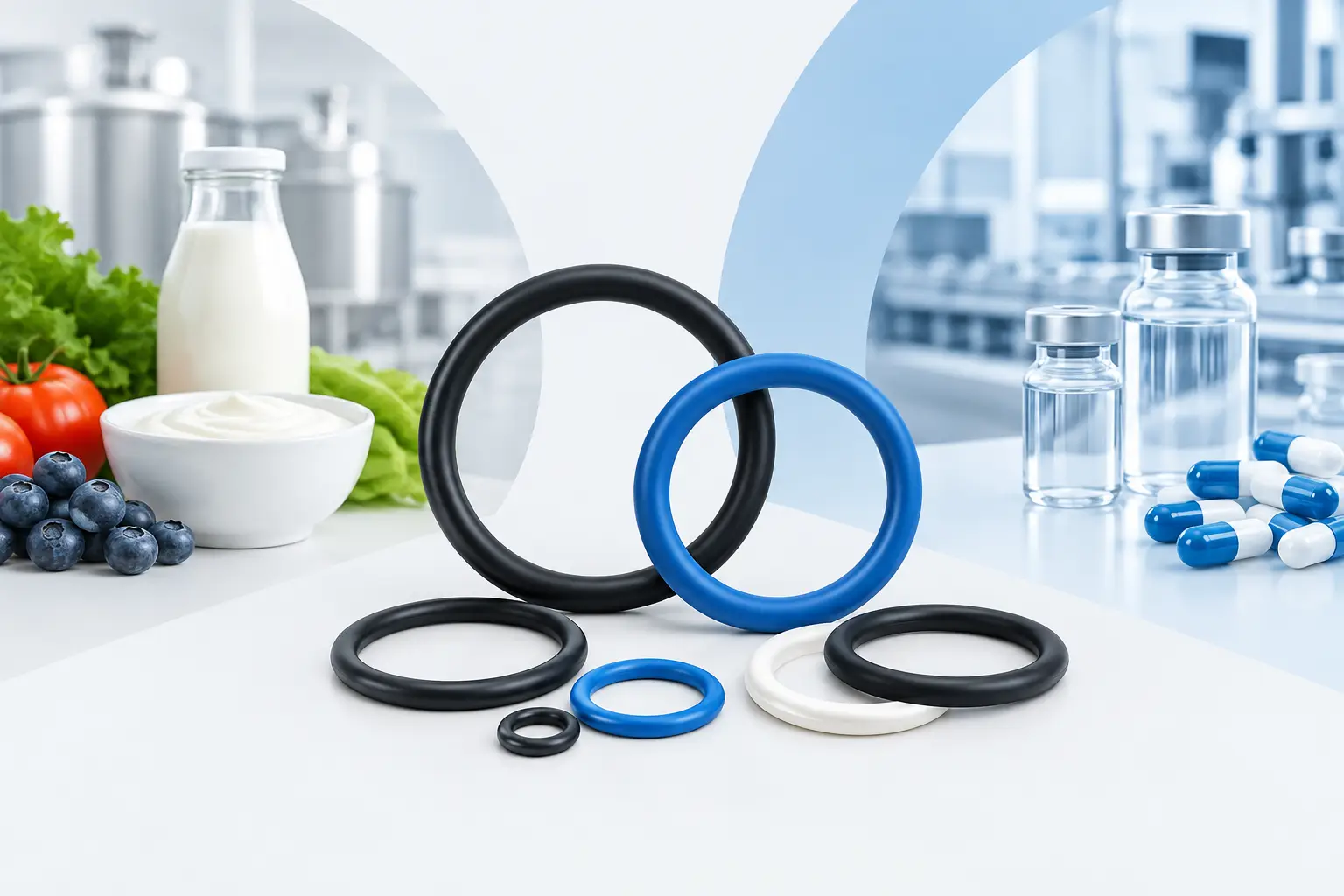
A seal that holds pressure but introduces an unsuitable material into a food, beverage, or pharmaceutical process is not a successful seal. FDA compliant o rings must do more than fit a groove and stop a leak. They must be selected with the process media, temperature, cleaning method, compliance documentation, and equipment duty cycle in view.
For maintenance teams and procurement professionals, that makes the choice more demanding than ordering an O-ring by inside diameter and cross-section. The right component helps protect product quality, maintain equipment reliability, and keep scheduled production moving. The wrong one can create contamination concerns, premature failure, costly line stoppages, and difficult documentation questions.
What FDA Compliance Means for O-Rings
The phrase “FDA compliant” is widely used, but it can mean different things depending on the application. The FDA does not typically approve a finished, off-the-shelf O-ring as a standalone product. Instead, food-contact suitability is generally tied to the material formulation and its intended conditions of use under applicable FDA food-contact regulations.
That distinction matters. An elastomer may be suitable for contact with certain food types, temperatures, or exposure periods, while not being suitable for every process. A material that performs well in a chilled-water valve may not be the right choice for hot edible oils, steam sterilization, aggressive cleaning chemicals, or repeated clean-in-place cycles.
A dependable purchasing process should therefore confirm the specific compound, not simply the base polymer. Two O-rings described as silicone, EPDM, or fluorocarbon can have different fillers, pigments, curing systems, or performance limits. Request documentation that identifies the compound and supports its intended food-contact use. When your quality program requires it, retain that documentation with the equipment maintenance record.
Selecting FDA Compliant O Rings by Application
Material selection begins with the process, not the catalog. Start by identifying what the seal will contact, how often it will cycle, the operating temperature range, pressure conditions, and the cleaning or sterilization procedures used on the line.
Silicone for flexibility and temperature range
Silicone O-rings are often selected where flexibility, broad temperature performance, and clean processing are priorities. They are common in food handling, beverage equipment, dairy systems, and certain pharmaceutical applications. Their flexibility can make installation easier and support effective sealing in static connections.
The trade-off is mechanical durability in demanding dynamic service. Silicone may not be the best answer where abrasion, extrusion risk, or frequent movement is severe. It also must be matched to the specific process fluids and cleaning agents rather than selected on temperature capability alone.
EPDM for water, steam, and cleaning exposure
EPDM is frequently considered for hot water, steam, aqueous products, and many cleaning environments. It can be a practical choice for washdown-intensive operations and systems using water-based media. Its resistance profile makes it useful in many food and beverage utility applications.
EPDM is generally not the preferred material for petroleum-based oils and many hydrocarbon fluids. If a lubrication point, process ingredient, or cleaning chemistry includes oils, confirm compatibility before specifying EPDM. A material can meet a food-contact requirement and still fail prematurely because it is not suited to the actual media.
Fluorocarbon for chemical and oil resistance
Fluorocarbon O-rings are valued for resistance to many oils, fuels, and chemicals, along with elevated-temperature performance. They can be a strong option for equipment exposed to fatty products, oil-based ingredients, or challenging chemical conditions where other elastomers may swell or degrade.
However, fluorocarbon is not a universal solution. Low-temperature flexibility, steam exposure, compound compliance, and cost must all be reviewed. Choosing the highest-cost polymer without considering the full operating profile does not guarantee longer service life.
Nitrile and other specialized compounds
Nitrile can offer useful resistance to certain oils and fats and may be suitable for specific food-processing duties when the compound supports the required food-contact use. Specialty compounds may also be needed for high-purity pharmaceutical production, aggressive sanitation programs, or unusual media.
The key point is simple: base material is only the starting point. The compound, application conditions, and required documentation determine whether an O-ring is appropriate for the job.
Size, Hardness, and Groove Design Still Control Performance
Compliance does not compensate for an incorrect fit. An O-ring that is too large, too small, excessively compressed, or installed in a damaged groove can leak, tear, or shed material. In sanitary and production-critical equipment, those failures can quickly become a quality and uptime issue.
Verify the inside diameter, cross-section, gland dimensions, and mating hardware before ordering. In a static face seal, the compression requirements differ from a reciprocating cylinder, valve stem, or rotating application. Dynamic service adds friction, wear, and possible extrusion to the decision.
Hardness is equally important. A softer O-ring may conform well to minor surface irregularities, while a harder compound may better resist pressure and extrusion. Neither is automatically better. The correct hardness depends on pressure, clearance gaps, hardware condition, temperature, and the movement of the application.
If pressure is high or clearances are substantial, an anti-extrusion design or a different sealing arrangement may be necessary. Replacing a failed O-ring with the same nominal size without addressing groove damage, shaft wear, or pressure spikes often leads to another unplanned repair.
Documentation Should Match Your Quality Requirements
For food, beverage, and drug-production facilities, documentation can be as essential as the physical seal. A maintenance manager may know a compound has worked for years, but an audit, customer requirement, or product investigation can still require evidence of material suitability and traceability.
Ask for the documentation appropriate to your program. This may include a certificate of conformance, material compliance statement, compound identification, lot traceability, or information supporting the applicable food-contact regulation. Be clear about whether the O-ring will touch product directly, contact a cleaning solution, or serve in a non-product utility system. Each situation can carry a different level of review.
Avoid relying on a generic statement that an item is “food grade.” That description is not a complete specification. A complete purchasing record should connect the supplied part number and compound to the application requirements your facility has established.
Installation and Maintenance Protect the Seal You Selected
Even a correctly specified O-ring can fail during installation. Inspect grooves, glands, and mating surfaces for burrs, corrosion, scratches, residue, and sharp edges. Use a compatible lubricant only when the application permits it, and avoid stretching or twisting the O-ring beyond what the installation requires.
During maintenance, look for patterns in removed seals. Flattening may point to compression-set concerns. Nicks and cuts can indicate handling damage or sharp hardware edges. Swelling can suggest chemical incompatibility, while cracking may indicate heat, ozone, or aging exposure. These observations help move the repair from a simple replacement to a correction of the underlying issue.
For critical assets, standardize approved O-ring part numbers by equipment location and keep the required documentation accessible. That approach reduces substitution errors during urgent repairs and gives purchasing teams a clearer basis for maintaining the right inventory.
When to Ask for Selection Support
A standard replacement is straightforward when the existing part number, compound, and service history are known. Selection support becomes more valuable when a line is changing products, cleaning chemistry has been revised, a seal is failing repeatedly, or compliance records are incomplete.
International Seals helps industrial buyers match O-rings and related sealing components to operating conditions, dimensions, and performance requirements. Direct access to a seal specialist can help clarify material options before a purchasing decision becomes a production problem.
A reliable food or pharmaceutical seal is rarely chosen on compliance language alone. It is chosen by connecting material documentation with the actual process, then confirming that the size, hardness, installation, and maintenance plan will protect the equipment and the product moving through it.
Leave a Reply