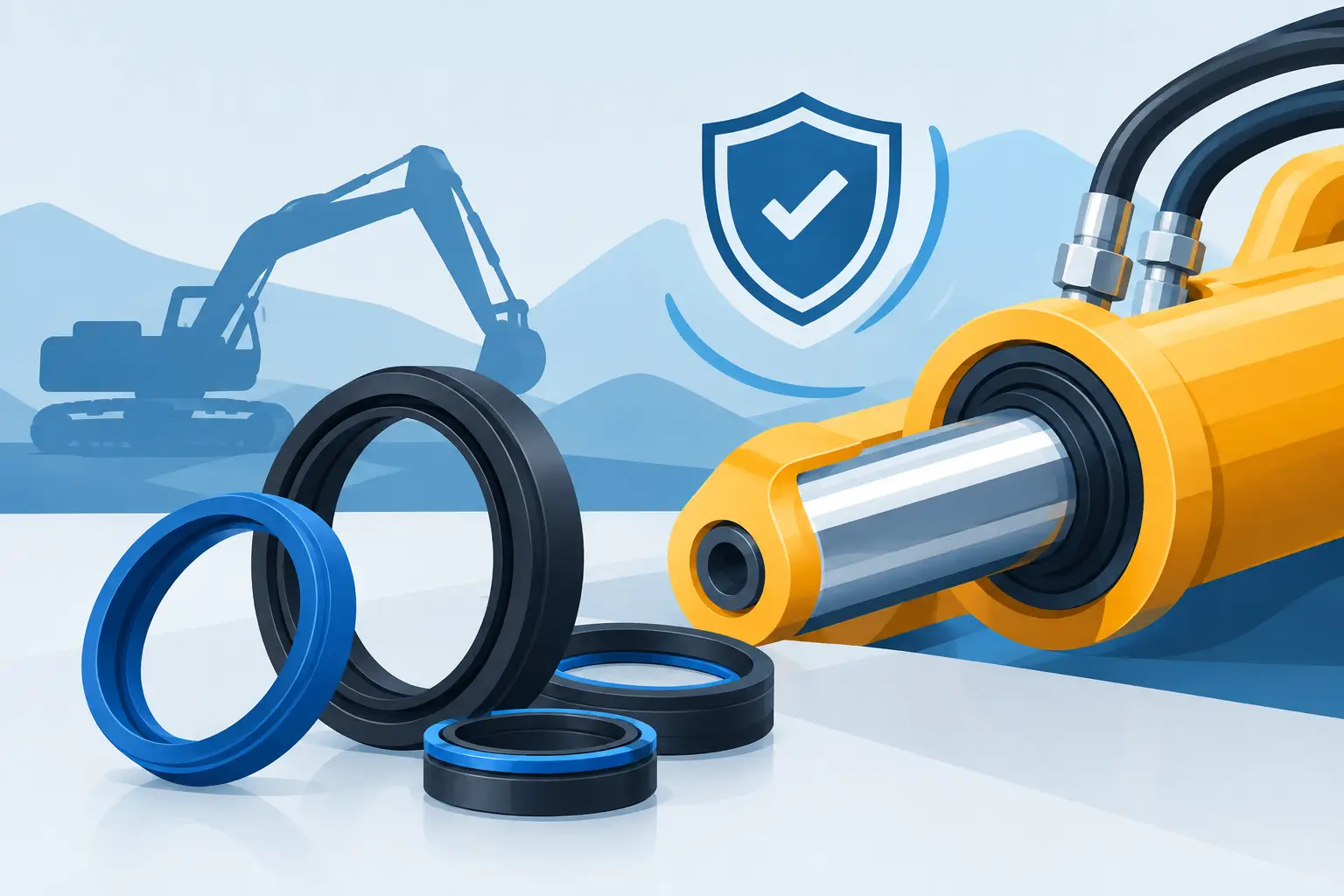
A hydraulic system can lose performance long before a major component fails. A small fluid leak, pressure drop, or contaminated cylinder can slow a machine, create a safety concern, and turn a planned maintenance task into an urgent repair. Hydraulic seals are the components that stand between working fluid and those consequences. Correctly selected, they maintain pressure, control leakage, protect internal surfaces, and help critical equipment deliver dependable service.
For maintenance managers, engineers, and purchasing teams, the objective is not simply to replace a worn seal. It is to restore equipment with confidence that the replacement will suit its operating pressure, fluid, temperature, motion, and installation conditions. That distinction matters when uptime, product quality, and worker safety are on the line.
What Hydraulic Seals Do in Working Equipment
Hydraulic seals contain fluid within equipment that converts hydraulic pressure into controlled force and movement. They are used in cylinders, pumps, valves, motors, presses, mobile equipment, lifting systems, and many other industrial applications. While their designs vary, their purpose is consistent: keep fluid where it belongs and keep contaminants out.
In a hydraulic cylinder, piston seals separate pressurized fluid chambers so the piston can generate force. Rod seals contain fluid as the rod moves in and out of the cylinder. Wipers, also called scraper seals, remove dirt, moisture, and abrasive particles from the rod before they can enter the system. Static seals, including O-rings and bonded seals, prevent leakage between fixed mating surfaces.
A seal is therefore part of the equipment’s performance system, not a minor accessory. When it holds pressure properly, the cylinder responds predictably and fluid levels remain stable. When it fails, the results can include sluggish movement, external leakage, internal bypass, contaminated fluid, damaged rods or bores, and avoidable downtime.
Selecting Hydraulic Seals for the Actual Application
A replacement that appears to fit may still be the wrong choice. Dimensions are essential, but they do not tell the full story. The right seal must work with the equipment’s real operating environment, including peak pressure, cycling frequency, speed, fluid chemistry, temperature range, surface finish, and exposure to contamination.
Pressure and system movement
Pressure affects more than the seal’s ability to contain fluid. High pressure can force a seal into clearance gaps, causing extrusion, deformation, or rapid wear. In demanding applications, a backup ring or a seal profile designed for higher pressure may be necessary to provide guaranteed protection.
Motion also changes the selection. Reciprocating cylinder seals must manage rod or piston movement without excessive friction. Rotary applications require seals that can tolerate shaft speed, runout, and lubrication conditions. A static O-ring may perform well between fixed components but is not a substitute for a dynamic rod or piston seal.
Fluid and temperature compatibility
Hydraulic oils, water-based fluids, synthetic fluids, fuels, and process chemicals can affect elastomer performance differently. A material that performs well in one fluid may soften, swell, harden, or crack in another. Temperature adds another layer of consideration, especially where equipment cycles between cold startup conditions and sustained heat.
Nitrile is commonly used for many petroleum-based hydraulic fluids, while other compounds may be better suited to high temperatures, aggressive chemicals, or specialized fluids. Material selection should reflect the full operating range, not only normal conditions. A seal that works during a brief shop test may fail prematurely after weeks of high-temperature production service.
Contamination and equipment condition
A new seal cannot compensate for a scored rod, damaged bore, excessive side loading, or contaminated hydraulic fluid. Abrasive particles can cut sealing lips and accelerate wear. Corrosion pits and rough surfaces can create leak paths. Misalignment can place uneven stress on the seal and shorten its service life.
Before installation, inspect the rod, bore, gland, and mating surfaces. Confirm that grooves are clean, edges are free of burrs, and the seal is not being stretched, twisted, or pinched during assembly. If the old seal failed unusually quickly, treat that failure as evidence to investigate rather than a reason to install the same part again.
Common Seal Types and Their Roles
Most hydraulic systems use several seal types because each location presents a different challenge. Piston seals manage pressure separation inside a cylinder. Rod seals prevent fluid from escaping along the moving rod. Wipers keep external debris from entering the assembly. Wear rings guide moving components and reduce metal-to-metal contact, helping protect both seals and cylinder surfaces.
O-rings are widely used as static seals in hydraulic fittings, valves, ports, and housings. Their simple geometry makes them versatile, but reliable performance still depends on correct gland dimensions, material compatibility, and resistance to extrusion. Bonded seals combine a metal washer with an elastomer sealing element and are often used where threaded connections require dependable fluid containment.
In pumps and motors, rotary shaft seals prevent fluid loss at rotating shafts while helping exclude outside contamination. Mechanical seals may be required in more demanding fluid-handling equipment where pressure, temperature, shaft movement, or process requirements exceed what a standard lip seal can manage.
The practical lesson is straightforward: seal categories are not interchangeable. Matching the component to its location and duty helps maintain maximum performance while avoiding repeat repairs.
Signs a Hydraulic Seal Needs Attention
External fluid around a rod, fitting, shaft, or cylinder gland is the most visible warning sign, but it is not the only one. Internal leakage can reduce force and speed without producing a puddle. A cylinder that drifts under load, hesitates during movement, or requires more frequent fluid top-offs may have a sealing issue.
Other warning signs include rising fluid temperature, dirty or aerated oil, visible scoring on rods, repeated failure of the same seal location, and contamination around wiper areas. In food, drug, water-management, and power-generation environments, even a minor leak can create compliance, cleanup, or equipment-reliability concerns that demand prompt action.
Responding early is usually less costly than waiting for complete failure. A seal replacement performed during scheduled service can prevent loss of fluid, secondary component damage, and an unplanned shutdown. The right maintenance decision depends on the criticality of the asset, the severity of the leak, and whether the failure points to a larger system problem.
Installation Practices That Protect Seal Life
Even the correct seal can be damaged before the equipment returns to service. Installation tools should be appropriate for the seal size and profile, with no sharp edges that can nick the sealing lip. Lubrication should be compatible with the seal material and system fluid. Components should be assembled carefully enough to avoid rolling, twisting, or shaving the seal.
For cylinder repairs, confirm seal orientation before installation. Many lip-style seals are directional, and installing one backward can cause immediate leakage or pressure loss. Check the manufacturer or equipment specification when available, particularly for energized seals, multi-piece piston assemblies, and specialized profiles.
After reassembly, test the equipment at controlled pressure and observe for leakage, irregular movement, or heat buildup. Documenting the seal type, material, dimensions, failure symptoms, and operating conditions can make future maintenance faster and more accurate. That record is especially valuable for facilities with multiple machines, repeat rebuilds, or hard-to-source legacy equipment.
A Reliable Supply Partner Makes Selection Faster
When a seal has failed, purchasing teams often need more than a part number. They may need help identifying an unknown profile, verifying material compatibility, or finding an equivalent that fits an older cylinder or pump. Responsive technical guidance can prevent a rushed decision that creates another repair cycle.
International Seals supports industrial buyers with a broad range of O-rings, bonded seals, rotary shaft seals, mechanical seals, gasket systems, and related components. For teams responsible for critical equipment, access to a knowledgeable specialist and clear delivery tracking can make the difference between a controlled repair and prolonged interruption.
The best hydraulic seal is the one selected for the real demands of the equipment, installed correctly, and supported by a maintenance plan that catches problems before pressure loss becomes downtime.
Leave a Reply