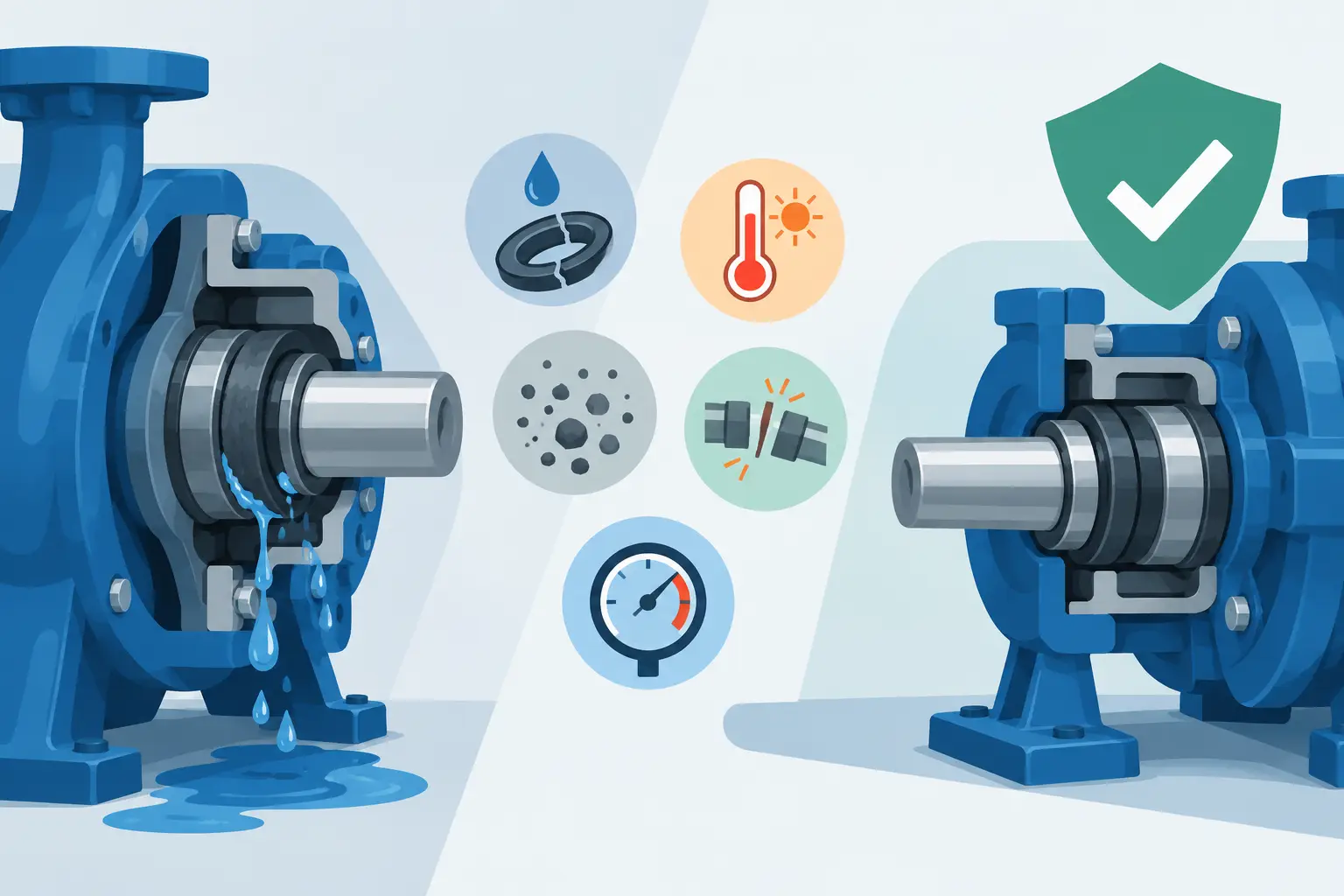
A shaft seal rarely fails without leaving evidence behind. A wet bearing housing, rising lubricant use, contamination around the shaft, or repeated replacement intervals are all signals that deserve attention. Understanding shaft seal failure causes helps maintenance teams correct the operating condition behind the leak, rather than repeatedly replacing a seal that was never given a fair chance to perform.
For pumps, gearboxes, motors, mixers, agricultural equipment, and industrial processing machinery, a rotary shaft seal protects more than fluid containment. It helps keep contaminants out, maintains lubrication where it is needed, and protects bearings and other high-value components from damage. The cost of one leaking seal can quickly expand into lost production, safety exposure, unplanned labor, and premature equipment failure.
The Most Common Shaft Seal Failure Causes
Most seal problems trace back to a limited number of installation, operating, and equipment conditions. The failed seal itself often provides useful clues, but the best corrective action comes from considering the full application: shaft condition, pressure, speed, fluid, temperature, contamination, and alignment.
Incorrect seal selection
Using a seal that does not match the application is one of the most preventable failure causes. A standard lip seal may be suitable for a clean, lubricated shaft operating at moderate speed, but it may not hold up in a high-pressure housing, abrasive environment, dry-running condition, or system exposed to aggressive chemicals.
Material compatibility is central to selection. The elastomer must tolerate the process fluid, lubricant, temperature range, and cleaning chemicals without swelling, hardening, cracking, or losing its sealing force. The lip design, spring arrangement, case style, and dust-exclusion features also need to match the environment. A seal selected only by dimensions can fit the bore perfectly and still fail early.
This is especially relevant where operating conditions change. A gearbox that runs hotter after a production increase, or a pump converted to a different fluid, may need a different seal material or design. Reviewing the application whenever conditions change is often less expensive than managing recurring leaks.
Shaft surface damage and excessive wear
The sealing lip depends on a controlled contact surface. Grooves, corrosion, pitting, scratches, plating defects, or an uneven wear track can create a path for fluid to escape. In many cases, installing a new seal on a worn shaft gives a brief improvement before the leak returns.
Shaft finish matters as much as visible damage. A surface that is too rough can rapidly wear the sealing lip. One that is too smooth may not retain the microscopic lubricant film the lip needs. Runout and shaft misalignment also cause the lip to move excessively, producing uneven wear and heat.
Before installation, inspect the shaft at the seal contact area. Measure wear when possible and look beyond the obvious groove. Depending on the equipment and available space, the right repair may involve repositioning the seal, using a wear sleeve, repairing the shaft, or specifying a seal designed for a slightly different contact location.
Installation damage
A high-quality shaft seal can be damaged before the equipment is restarted. Common installation errors include forcing the seal into a bore at an angle, striking the seal case directly, damaging the lip on a keyway or shaft thread, or installing the seal backward.
The sealing lip is particularly vulnerable. A sharp shaft edge can cut or roll the lip, while a dry installation can create damaging friction on the first few rotations. Dirt introduced during assembly may become trapped at the sealing interface and cause immediate abrasion.
Use a proper installation tool that applies force evenly to the seal case, not the flexible lip. Protect the lip when it must pass over splines, threads, or keyways. Confirm installation depth and orientation against the equipment requirements. A small amount of appropriate assembly lubricant may be needed, although the correct practice depends on seal material and application fluid.
Heat, pressure, and poor lubrication
Heat changes seal materials and accelerates wear. Elevated temperatures can harden elastomers, reduce lip flexibility, weaken the sealing edge, and degrade the lubricant film. Pressure can force the lip away from the shaft or cause it to distort, particularly when the seal was not designed for the pressure level involved.
Poor lubrication creates a similar result. The lip needs a thin fluid film to control friction and heat. If a seal runs dry, the contact temperature can rise quickly enough to glaze, crack, or burn the lip. On the other hand, overfilled housings or blocked breathers can raise internal pressure and push fluid past an otherwise serviceable seal.
When a seal shows heat damage, replacing it is necessary, but it is not the complete repair. Check lubricant level and condition, operating temperature, breather function, cooling performance, and system pressure. A seal with pressure capability or a more suitable material may be required, but the source of the excess heat or pressure must also be corrected.
Contamination at the sealing point
Dust, sand, metal fines, washdown chemicals, and process debris can wear a sealing lip quickly. Contamination is common in aggregate handling, agriculture, construction equipment, mining, water treatment, and outdoor industrial applications. It may enter from outside the equipment, circulate through contaminated lubricant, or accumulate around the shaft where the seal operates.
A basic single-lip seal may not offer enough exclusion in severe conditions. A design with an auxiliary dust lip, multiple lips, or a dedicated external contaminant barrier can provide better protection. The trade-off is that added lip contact can increase friction and heat, so the selection must still account for shaft speed and temperature.
If abrasive contamination is present, inspect the entire protection strategy. Guarding, shields, breather quality, lubricant filtration, cleaning practices, and shaft surface condition all affect seal life. A better seal helps, but it cannot fully compensate for a contamination path that remains open.
Bearing wear, vibration, and misalignment
A shaft seal follows the shaft. When bearings wear, the shaft can move radially or axially beyond what the sealing lip can accommodate. Excessive vibration, bent shafts, loose housings, and coupling misalignment create similar movement. The result is often an uneven contact pattern, rapid lip wear, and leakage that appears to be a seal issue but begins elsewhere in the machine.
This is why repeated seal failure should trigger a broader equipment inspection. Check bearing condition, shaft runout, housing bore integrity, coupling alignment, and vibration history. Replacing seals without correcting shaft movement can turn a mechanical reliability issue into an ongoing maintenance expense.
How to Diagnose the Failure Before Selecting a Replacement
The appearance of a removed seal can help narrow the cause. A hardened or cracked lip often points to heat, chemical incompatibility, or age. A polished or worn lip may indicate abrasive contamination, poor shaft finish, or excessive speed. A lip that is rolled, cut, or torn can indicate installation damage or a shaft edge problem. Fluid found behind the seal may suggest pressure buildup or a damaged bore fit.
Treat these signs as evidence, not final proof. A seal can show more than one failure mode because operating problems frequently overlap. For example, bearing wear may increase shaft movement, while contamination then accelerates lip wear. A complete inspection saves time and supports a more dependable repair.
Document the seal part number, equipment model, shaft size, bore size, fluid type, temperature range, speed, pressure, and environmental exposure before ordering a replacement. This information gives a seal specialist the basis to recommend a practical solution rather than a guess based on outside diameter and width alone.
Preventing Repeat Seal Failures
The most effective prevention program starts with accurate application selection and continues through installation and routine inspection. Keep replacement seals clean and protected before use. Inspect shafts and housings during scheduled maintenance, particularly on critical pumps, reducers, and rotating equipment where a leak can stop production or create a safety concern.
Maintain correct lubricant levels, replace blocked breathers, and address contamination before it reaches the sealing area. When failures occur repeatedly, consider the total cost of the event, not only the unit cost of the seal. A properly selected seal, installed on a sound shaft and supported by stable operating conditions, can protect the equipment around it and significantly reduce downtime.
For demanding applications, International Seals can help teams review operating requirements and identify rotary shaft seals and related components suited to the equipment and environment. The right replacement is not simply the seal that fits today. It is the one that supports reliable operation through the next maintenance interval and beyond.
Leave a Reply